In LAVA, shear wall stiffness is determined from the calculated wall deflection using the simplified 3-term deflection equation suggested in the Special Design Provisions for Wind and Seismic (SDPWS).
The shear wall deflection is calculated as:
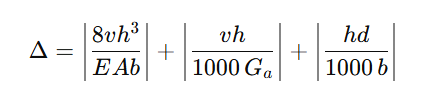
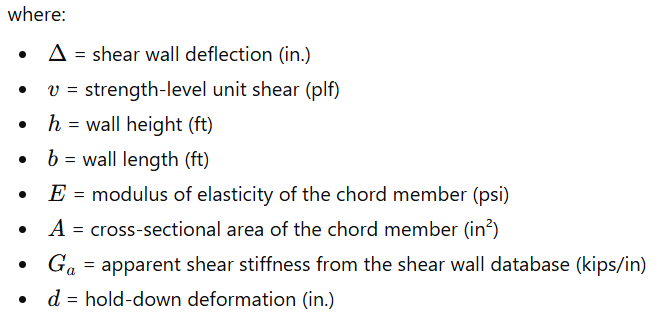
The three terms represent:
Chord bending / axial deformation
Panel shear deformation
Hold-down deformation
Wall Stiffness
After the wall deflection is calculated, the wall stiffness (rigidity) is determined as:
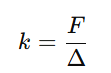
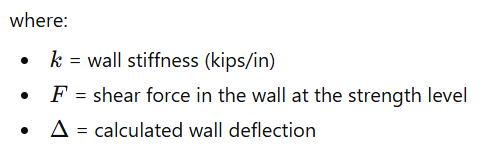
Because wall stiffness depends on the shear force acting on the wall, the stiffness and force distribution influence each other. For this reason, LAVA evaluates wall stiffness using the shear forces from the current analysis iteration and updates the stiffness values as needed during the analysis process.
Openings in Walls
For shear walls with openings, LAVA determines wall stiffness based on the deformation of the sheathing segments surrounding the opening.
Wall stiffness/deflection is calculated using the same three components as a solid wall except the second term is adjusted.
The presence of openings primarily affects the panel shear deformation term.
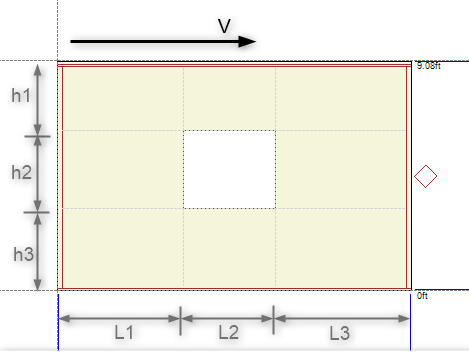
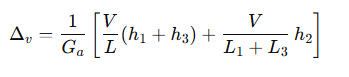
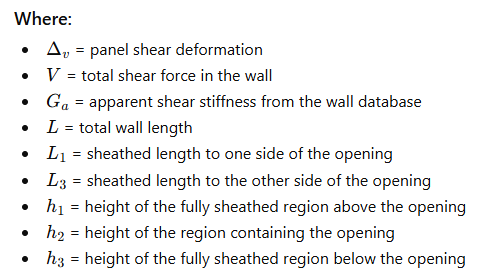
Because the effective shear stiffness varies along the height of the wall, the vertical location of the opening influences the total wall deformation and resulting stiffness.
This approach captures the variation in stiffness due to opening location, which is not reflected in simplified perforated wall reduction methods.
Shear Wall Stiffness Values
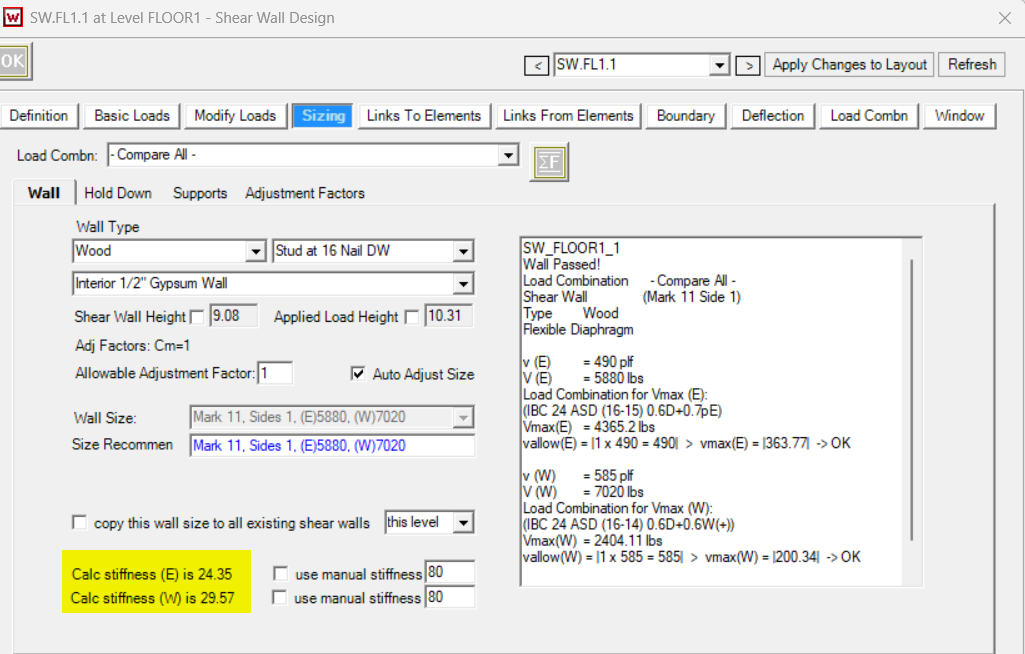
LAVA calculates the stiffness of each shear wall internally based on the wall geometry, material properties, hold-down behavior, and the shear forces acting on the wall. Because stiffness depends on the applied load, it is evaluated during the analysis process.
Users can view the resulting wall stiffness directly in the Shear Wall dialog.
Each wall reports two stiffness values:
E – Seismic stiffness
W – Wind stiffness
These values represent the effective stiffness of the wall used in the lateral analysis.
The seismic and wind stiffness values may differ because the unit shear used in the stiffness calculation is based on the governing load combination. Since seismic and wind load combinations produce different shear demands in the wall, the resulting stiffness values can vary between the two cases.